
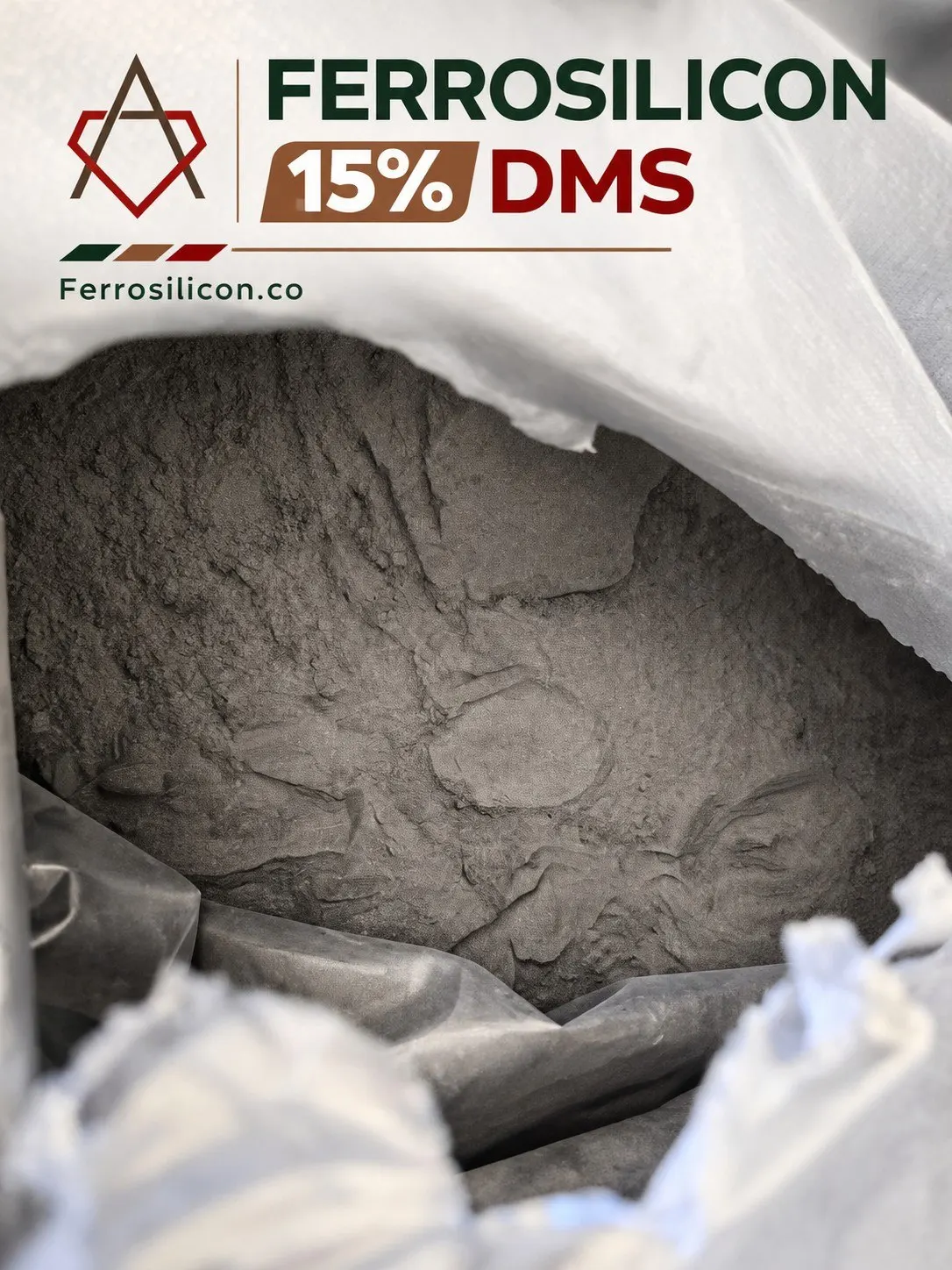
Ferrosilicon 15% (DMS)
Ferrosilicon 15% is a low-silicon ferrosilicon powder with roughly 14–16% Si, used mainly as a magnetic heavy medium in Dense Media Separation (DMS) and sink-float mineral processing. It ships as a fine, size-controlled powder, and its particle size and PSD largely decide medium stability, recovery and separation results. A typical FeSi 15% specification reads Si 14–16%, Fe 80% min, Mn 0.8% max, Cr 0.6% max, while density and particle-size targets depend on the DMS circuit and the supplier.
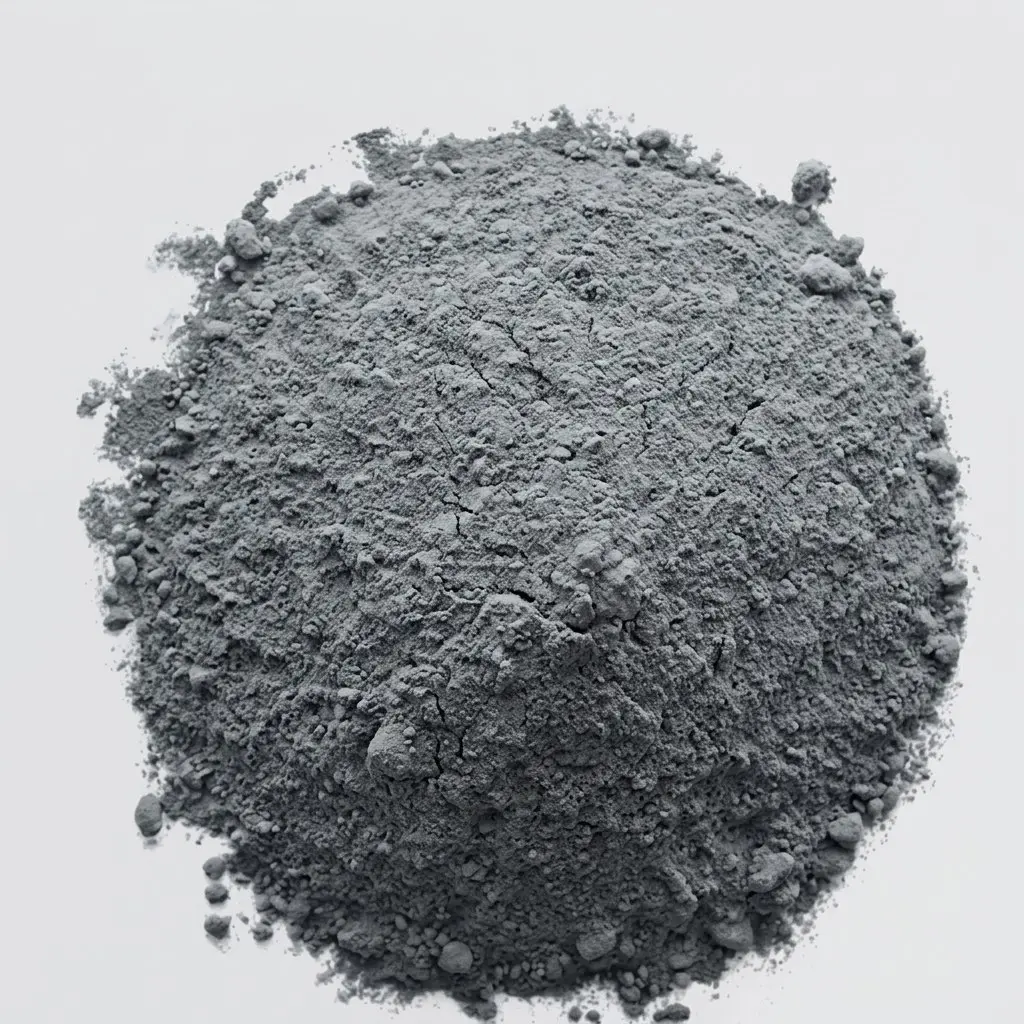
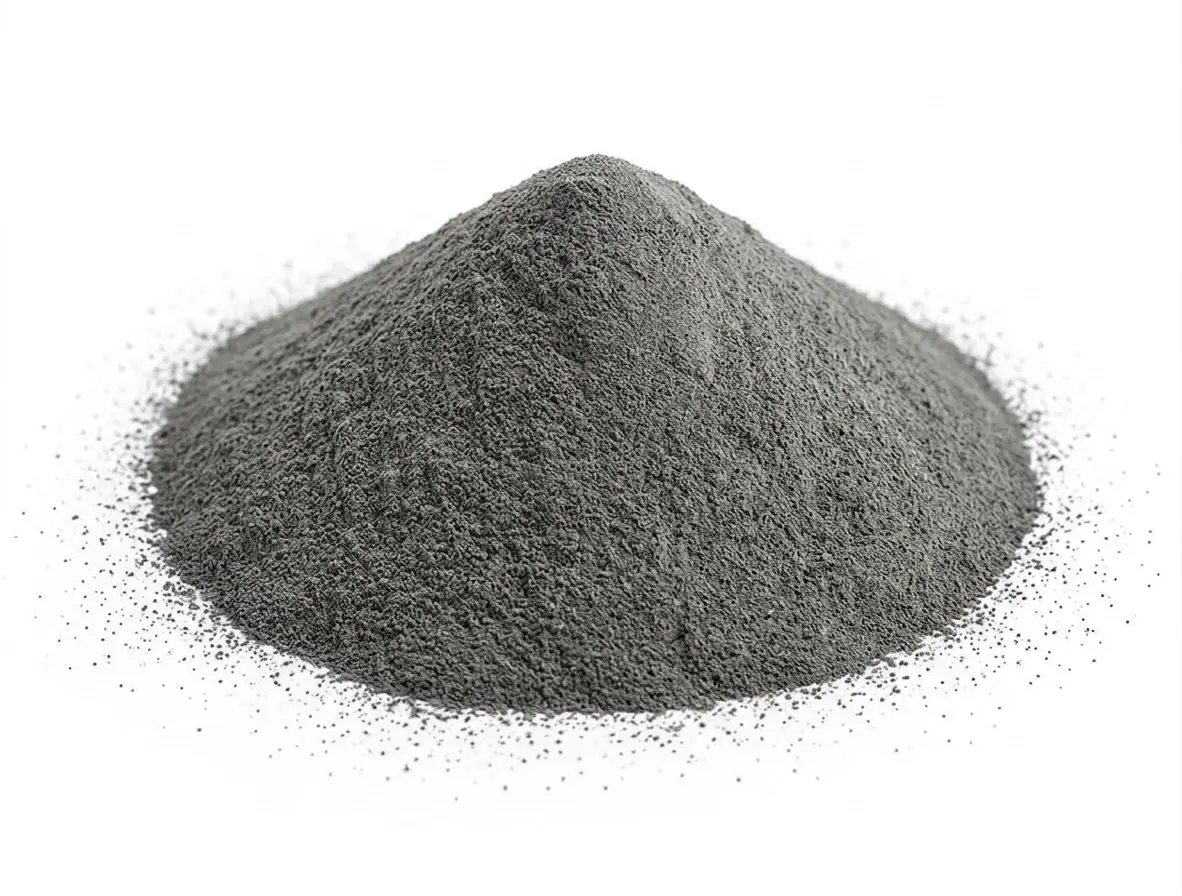
It is supplied in two main forms: atomized ferrosilicon (rounded, spherical particles) and milled ferrosilicon powder (crushed and ground, angular particles).
In 2026, the indicative export price of ferrosilicon powder 15% sits at around $1,300–$1,500 per metric ton, depending on order size, origin, particle size, quality, destination and delivery terms. The material is also sold as FeSi 15%, ferro silicon 15%, ferrosilicon powder 15%, atomized ferrosilicon 15%, low-silicon ferrosilicon and ferrosilicon DMS.
What Is Ferrosilicon 15% (DMS)?
Ferrosilicon 15% is a low-silicon ferrosilicon alloy with about 14–16% silicon, and its main job is to act as a heavy medium in Dense Media Separation. Standard FeSi grades go into steelmaking; this one is usually turned into a fine ferrosilicon powder 15% with a controlled particle size and a strong magnetic response.
Mixed with water, ferrosilicon DMS forms a dense, magnetically recoverable medium that splits minerals by density. For that duty, the chemistry, particle size, PSD, density and magnetic recovery all matter.
You will also see the product listed as FeSi 15%, ferro silicon 15%, ferrosilicon powder 15% or atomized ferrosilicon. The exact specification depends on the producer and on the DMS application it is made for.
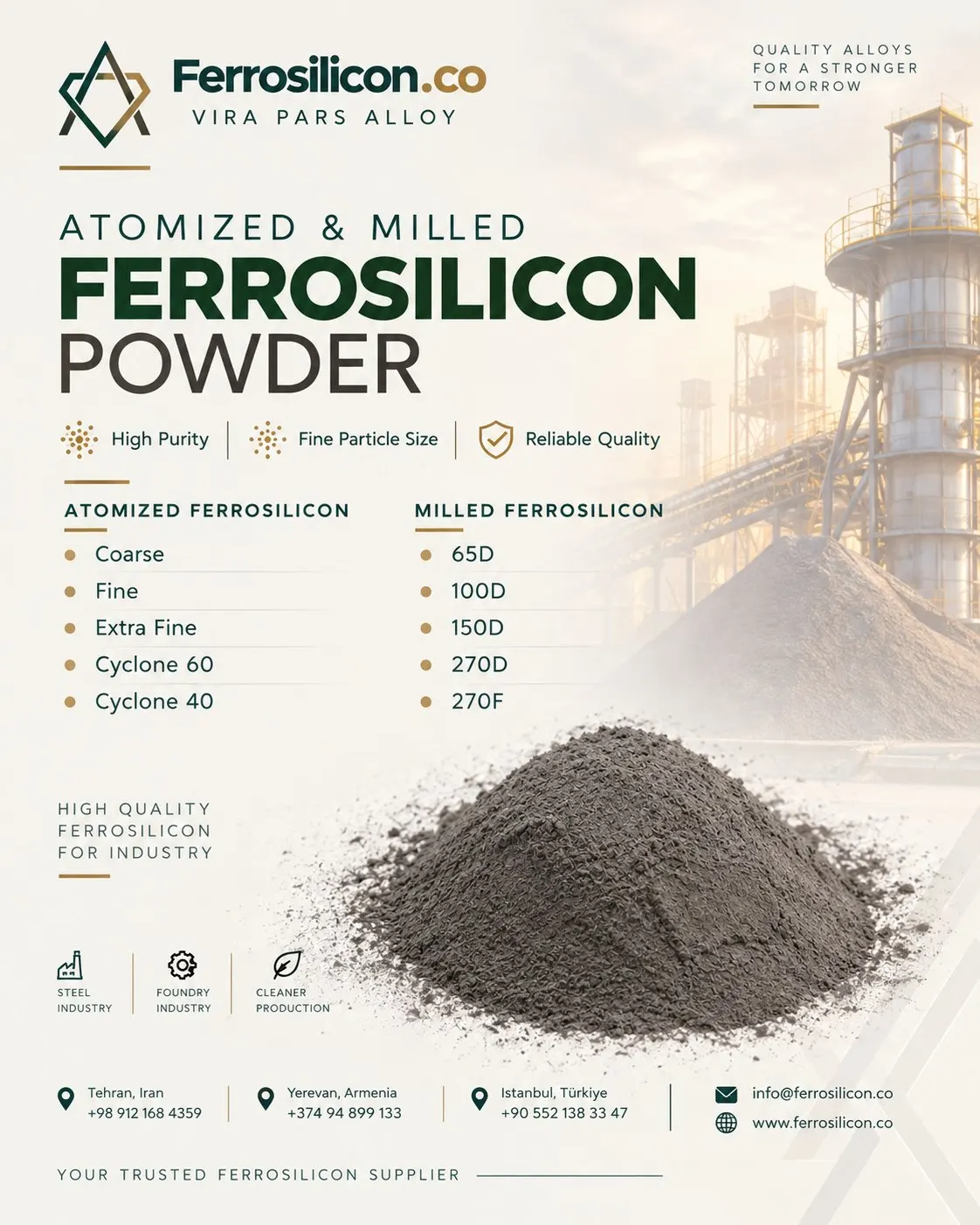
Ferrosilicon 15% Powder: Composition and Key Properties
Ferrosilicon 15% powder is built for work where density, magnetic recoverability and particle size count for more than a high silicon level. It generally holds 14–16% silicon and a minimum of 80% iron, with manganese (0.8% max) and chromium (0.6% max) controlled to low levels.
In a DMS plant the powder is mixed with water to make a dense suspension, and that suspension is the separating medium. Since the medium has to be pulled back out and reused after every pass, magnetism is a big part of what makes FeSi 15% worth buying. Producers make it by two routes: atomized ferrosilicon is water atomized directly to the required size distribution, while milled ferrosilicon powder is coarse granulated and then milled to the required size grade.
Each melt is sampled and tested for correct chemical analysis, and the final product is sampled, tested and assigned a batch number for traceability. Samples are also tested and verified by independent laboratories, so always check the supplier's certificate of analysis (COA), especially for material going into continuous DMS operation.
Typical Composition of Ferrosilicon 15%
| Property | Typical Specification | Why It Matters |
|---|---|---|
| Silicon (Si) | 14–16% | Defines the grade and shapes density and performance |
| Iron (Fe) | 80% min | Main source of the material's high density |
| Manganese (Mn) | 0.8% max | Controlled to suit the application |
| Chromium (Cr) | 0.6% max | Specified for certain quality requirements |
| Particle Size | Application-specific | Drives slurry stability, separation and magnetic recovery |
| Powder Form | Fine, controlled-size ferrosilicon powder (atomized or milled) | Makes a stable DMS medium possible |
| Pycnometric Density | 6.7–7.1 g/cm³ | Sets the density achievable in the DMS medium |
| Non-magnetics | 0.5% max | Keeps magnetic losses low for efficient recovery |
| Magnetic Susceptibility | 58 min | Lets the medium be separated from water and recycled |
Ferrosilicon 15% Grades and Specifications
Ferrosilicon 15% is specified by chemistry and by physical properties together. DMS material normally carries 14–16% Si, but particle size, PSD, density and magnetic recoverability are what decide how it performs in the circuit.
| Specification | Typical Range / Description |
|---|---|
| Silicon (Si) | 14–16% |
| Iron (Fe) | 80% min |
| Manganese (Mn) | 0.8% max |
| Chromium (Cr) | 0.6% max |
| Particle Size / PSD | Grade-dependent (65D–270D/270F milled; Coarse to Cyclone 40 atomized) |
| Pycnometric Density | 6.7–7.1 g/cm³ |
| Non-magnetics | 0.5% max |
| Magnetic Susceptibility | 58 min |
Commercial Physical Grades: Atomized & Milled
Dense medium ferrosilicon is produced by melting plate steel with 75% FeSi in a batch process, then finished by one of two routes: atomized products are water atomized directly to the required size distribution, while milled products are first coarse granulated and then milled down to the target grade. Commercial grades run from 65D up to 100D, 150D, 270D and 270F for milled ferrosilicon, and from Coarse and Fine up to Extra Fine, Cyclone 60 and Cyclone 40 for atomized ferrosilicon; the real difference between grades is particle-size distribution. Ferrosilicon.co's core milled range covers 100D, 150D and 270D, and the finest of these, the 270D-equivalent grade, is chosen where a very stable medium is needed. Grade names are not standardized across suppliers, so check the actual chemical analysis and PSD before you buy.
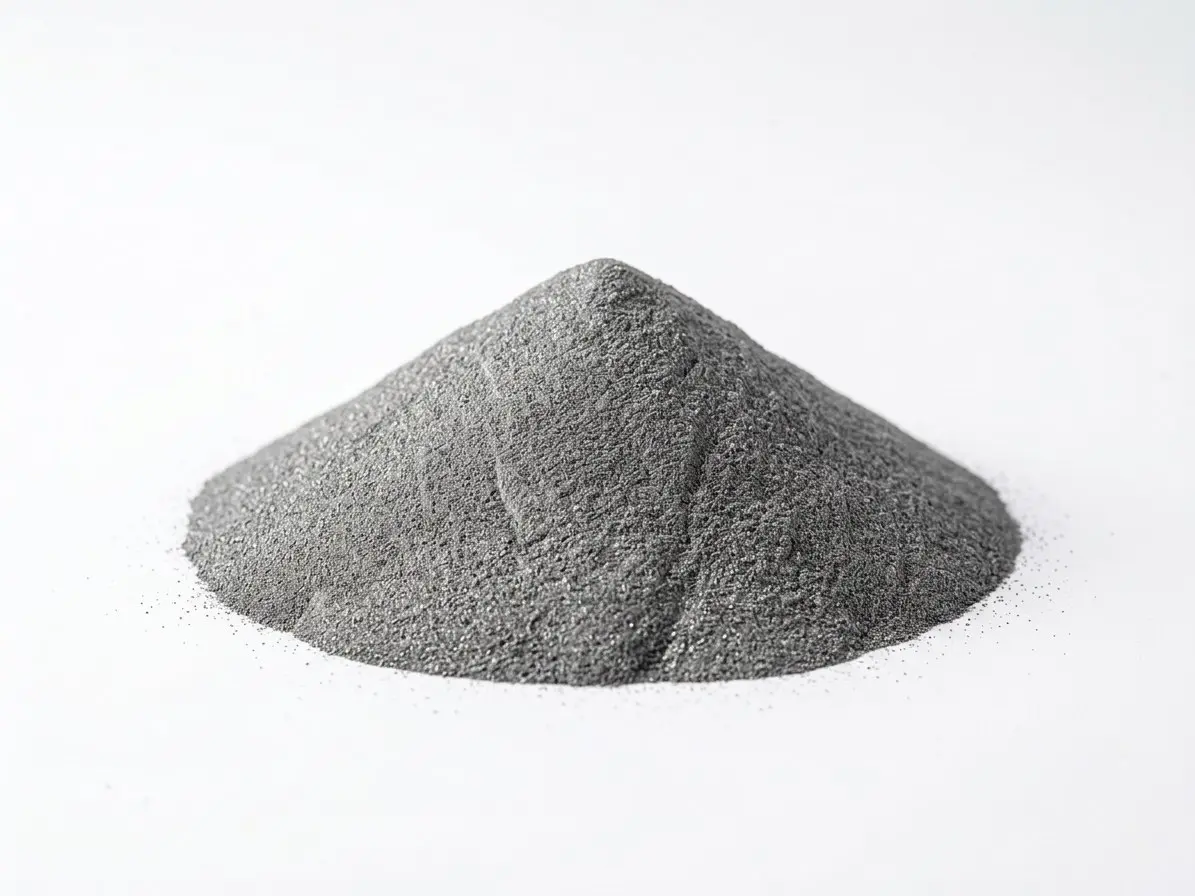
Ferrosilicon DMS for Dense Media Separation
Ferrosilicon DMS is one of the most common heavy media in Dense Media Separation, a mineral-processing method that sorts material by density. Ferrosilicon powder 15% is mixed with water into a dense suspension; particles lighter than the medium float, and heavier ones sink.
Its value in DMS comes from pairing high density with magnetism. Once separation is done, magnetic separators pull the medium back out and return it to the circuit, which keeps medium losses and operating costs down.
Consistent results depend on powder quality. Particle size, PSD, density, chemistry and magnetic recoverability all shape medium stability and separation efficiency, so the specification should be matched to the DMS equipment and to the density of the ore being treated. Atomized ferrosilicon is often chosen for cyclone circuits because its spherical particles give a smoother, more stable medium.
Where FeSi 15% Medium Is Used
Base-metal plants rely on it heavily in lead–zinc ore processing, where DMS rejects barren waste before milling. It is equally common in manganese ore beneficiation and chromite processing, and it remains the standard medium in diamond recovery plants, where a precise cut-point density is essential. It is also a standard heavy medium in coal washing and iron ore beneficiation.
Ferrosilicon 15% Price: What Affects the Cost?
The price of ferrosilicon 15% powder depends on production method, particle size, purity, order volume, packaging, origin and shipping terms. Production route has the biggest single effect, and the gap between milled and atomized production shows up clearly in quotations. For DMS use, published prices for atomized ferrosilicon 15% run at roughly $1,300–$1,500 per metric ton, while milled ferrosilicon powder usually sits toward the lower end of that band.
| Ferrosilicon 15% Product | Indicative Price (USD/MT) |
|---|---|
| Milled FeSi 15% powder | $1,300–$1,380 |
| Atomized ferrosilicon 15% | $1,300–$1,500 |
| Premium / Fine Atomized FeSi 15% | $1,420–$1,500+ |
These are indicative market figures, not fixed offers. Confirm the final ferrosilicon DMS price against PSD, Si content, impurity limits, MOQ, packaging and FOB/CIF terms.
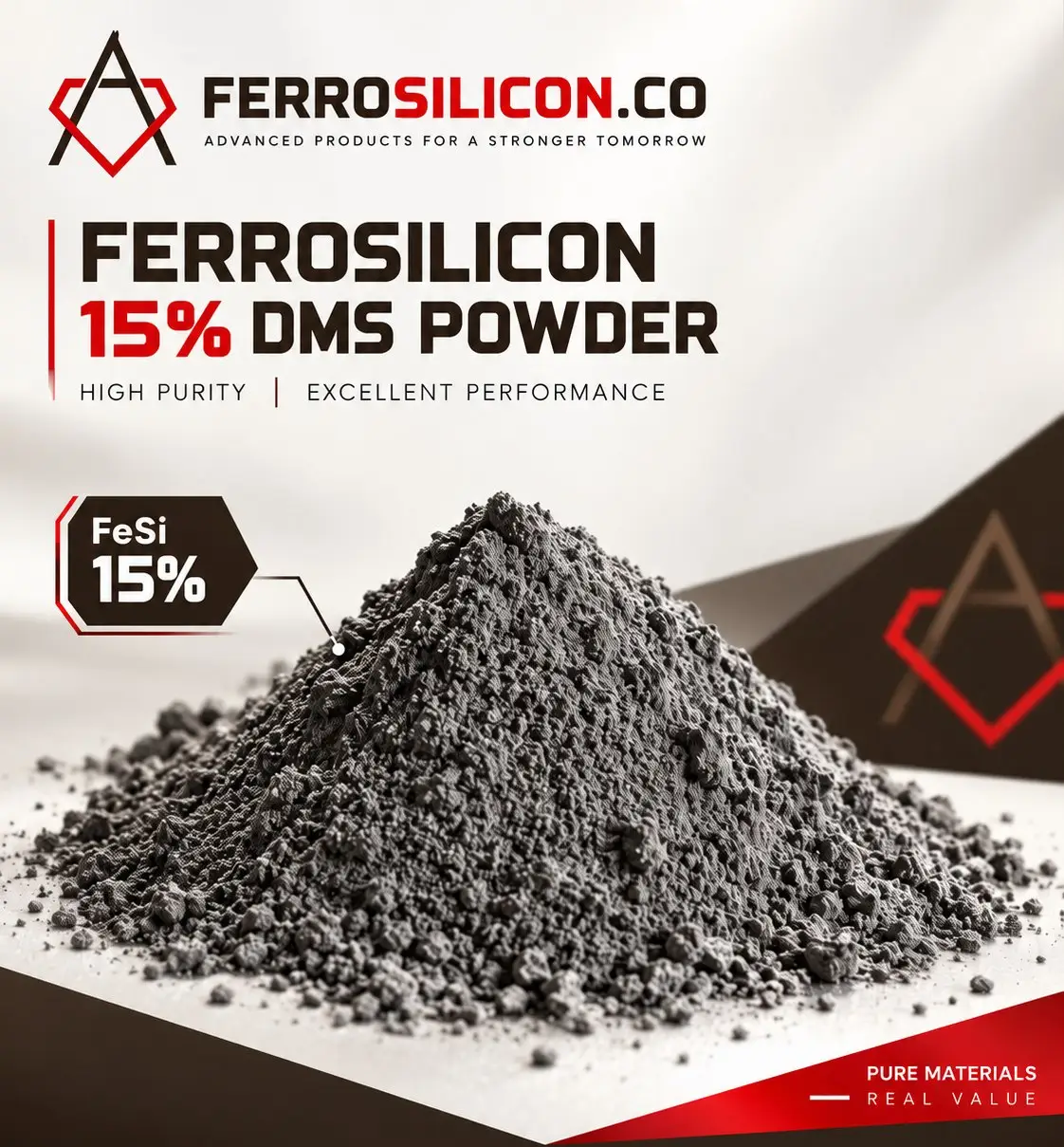
Ferrosilicon Powder 15% Particle Size and PSD
Particle size and particle-size distribution (PSD) have a direct effect on the stability and behaviour of a DMS medium. A well-controlled PSD keeps slurry density steady, limits excessive settling and supports efficient magnetic recovery.
The right size depends on the equipment and operating conditions. Finer ferrosilicon powder is used where a more stable suspension is needed, and coarser material fits certain circuits. Shape matters too: atomized ferrosilicon powder has rounded particles that flow easily and resist wear, which is why many cyclone plants prefer it.
| Grade | Passing 45 Micron | DMS Application |
|---|---|---|
| 100D | 61–69% | General DMS duty |
| 150D | 72–84% | Finer medium requirements |
| 270D | 85–93% | Fine, stable-medium duty |
No single universal PSD exists for ferrosilicon DMS. Suppliers use their own grade names and sieve ranges, so ask for the actual PSD or sieve analysis rather than comparing grade names alone.
Ferrosilicon 15% vs Standard Ferrosilicon Grades
Ferrosilicon 15% belongs to the same ferroalloy family as standard ferrosilicon, but its chemistry and physical form make it a very different product in practice.
- Silicon content: FeSi 15% carries about 14–16% Si, while standard grades run at 45%, 65% or 75%.
- Main application: FeSi 15% is a dense medium for DMS; standard FeSi is a deoxidizer and alloying agent in steel and cast-iron production.
- Powder form: DMS-grade material is supplied in a controlled size range for medium stability and magnetic recovery, whether as atomized ferrosilicon powder or as a ground DMS medium.
- Performance requirements: For ferro silicon 15%, particle size, PSD, density and magnetism come first; standard ferrosilicon is judged mostly on chemistry and alloying behaviour.
- Product selection: The right DMS grade depends on the process, the equipment and the target medium density, not on silicon content alone.
Buying Ferrosilicon 15% Powder for DMS
When sourcing ferrosilicon 15% powder for Dense Media Separation, look past the silicon figure. PSD, magnetic properties, density, purity, packaging and delivery terms all feed into the final performance and cost of the medium.
Ferrosilicon.co supplies micronized ferro silicon 15% and atomized ferrosilicon powder to international buyers, with custom particle-size specifications and export logistics. According to the company, its micronized FeSi 15% goes regularly to steel mills, foundries and mineral processors in more than 25 countries across Europe, the Middle East, the CIS and Asia.
| Country / Market | Relevance for Ferrosilicon 15% |
|---|---|
| India | Large ferrosilicon import market and major steel industry |
| South Africa | Strong mineral-processing and DMS market with high FeSi imports |
| Australia | Major mining market with established ferrosilicon imports |
| Turkey | Active ferroalloy import market and regional industrial hub |
| Germany | European steel, foundry and processing market |
| Italy | Established foundry and metallurgical industry |
| UAE | Regional trading and distribution hub |
| Saudi Arabia | Growing industrial and mineral-processing market |
| Vietnam | Steel and mineral-processing demand in Southeast Asia |
| South Korea | Large steel and advanced manufacturing market |
For bulk orders, Ferrosilicon.co can match the Si specification, PSD, packaging and shipping terms to your application. Request a current COA, technical sheet and commercial quotation before ordering, as DMS requirements and prices vary by grade and destination.
Frequently Asked Questions About Ferrosilicon 15% DMS
What is ferrosilicon 15% used for?
Ferrosilicon 15% is mainly used as a dense medium in Dense Media Separation (DMS), where it separates minerals by density. It also has some metallurgical and industrial uses.
What is the composition of ferrosilicon 15%?
Typical ferrosilicon 15% contains about 14–16% silicon and at least 80% iron, with manganese (0.8% max) and chromium (0.6% max) controlled to low levels. Exact limits depend on the producer and the product specification.
What is the difference between ferrosilicon powder 15% and standard ferrosilicon?
Ferrosilicon powder 15% has far less silicon than the common 45%, 65% or 75% FeSi grades. It is also processed into a controlled fine powder for DMS, where particle size and magnetic recovery are critical.
What is atomized ferrosilicon, and how does it differ from milled powder?
Atomized ferrosilicon is made by water atomizing molten alloy into fine, rounded particles, while milled ferrosilicon powder is coarse granulated and then milled into angular particles. Atomized material flows and suspends more smoothly and usually costs more; milled powder is the lower-cost option.
What is the price of ferrosilicon 15% powder?
The price of ferro silicon 15% depends on particle size, production method, order quantity, origin, packaging and delivery terms. Buyers should request a current quotation based on their DMS specification.
Where can I buy ferrosilicon 15% for DMS?
Ferrosilicon.co supplies ferrosilicon DMS, atomized ferrosilicon and micronized FeSi 15% to international markets. Buyers can request technical specifications, PSD, COA, packaging details and a quotation for their destination and application.
Conclusion
Ferrosilicon 15% is a specialized low-silicon grade widely used in Dense Media Separation for its high density, magnetic recoverability and suitability for controlled powder duty. When choosing ferrosilicon powder 15%, whether atomized or milled, look beyond Si content to PSD, purity, density and magnetic properties.
Specifications and prices differ between suppliers, so get a clear technical sheet and a current quotation before purchasing. Ferrosilicon.co supplies ferro silicon 15%, atomized ferrosilicon and ferrosilicon DMS worldwide and provides specifications tailored to application and destination.