
Ferrosilisyum Tozu Merkezi - Tüm Kalitelerin Analizi
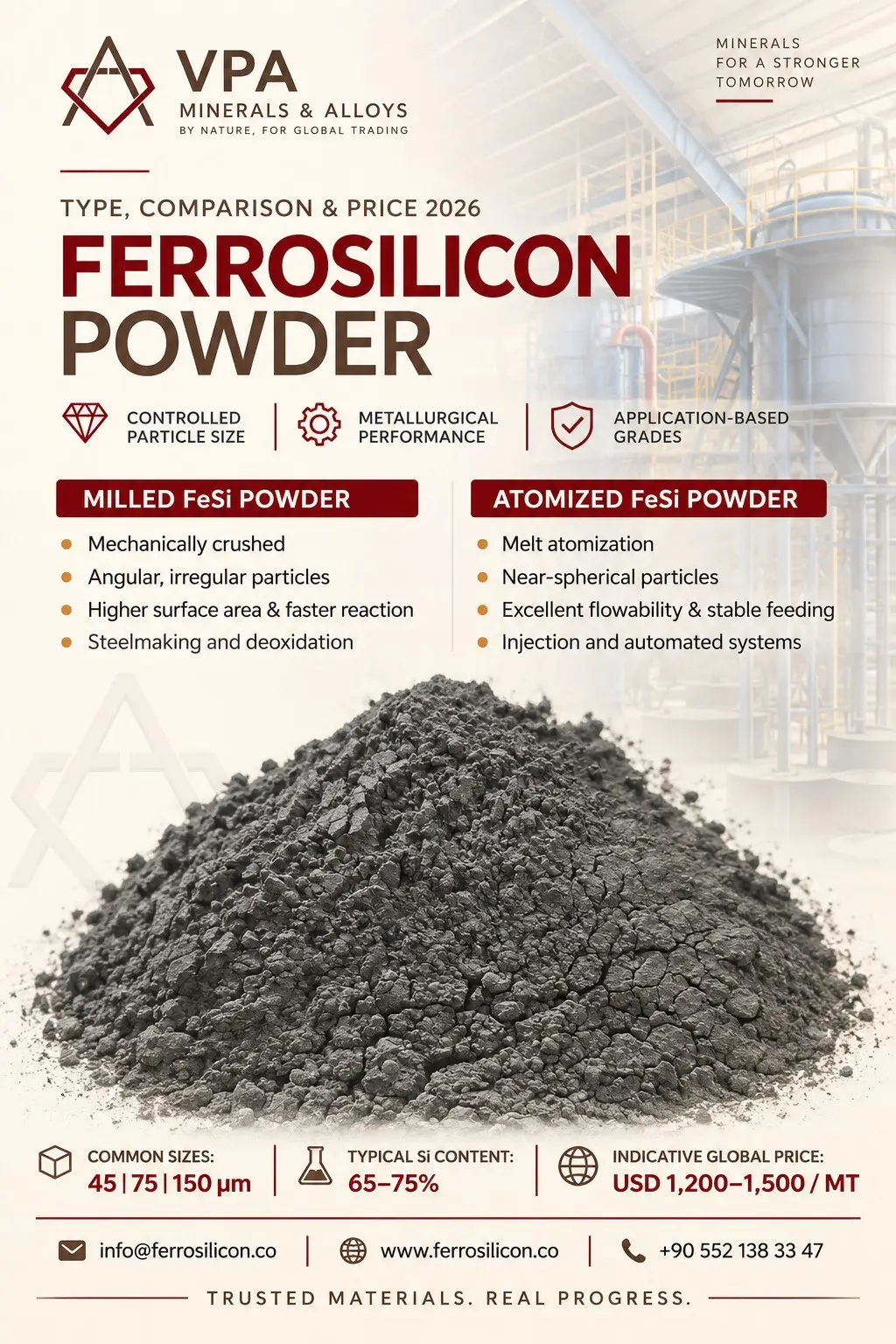
Ferrosilisyum Tozuna Genel Bakış:
Ferrosilisyum tozu; silikon ilavesinin, parçacık boyutunun ve besleme davranışının kontrol edilmesi gereken metalürjik proseslerde kullanılır. Doğru kalite; kimyasal bileşim, parçacık boyutu dağılımı (PSD), parçacık morfolojisi ve uygulama gereklilikleri dikkate alınarak seçilir.
Yaygın referans boyutları: 45 μm · 75 μm · 150 μm. Gerçek tedarik aralıkları, üzerinde anlaşılmış spesifikasyon ve parti analizine göre doğrulanır.
Doğru Ferrosilisyum Tozu Kalitesini Bulun
Proses gereksinimiyle başlayın. Bu seçici, teknik görüşmeler için ön değerlendirme aracıdır; nihai uygunluk tesisin çalışma koşullarına ve onaylı TDS'ye veya deneme sonuçlarına bağlıdır.
Uygulamaya Göre Kalite Bulucu
Prosesi ve ihtiyaç duyduğunuz parçacık davranışını seçin.
Orta silikon içerikli toz gereksiniminde sipariş vermeden önce kimyasal bileşimi ve PSD'yi hedef prosese göre doğrulayın.
Kalite Önerisi veya Fiyat Teklifi İsteyin
Gereksinimlerinizi teknik satış ekibimize gönderin. Seçtiğiniz kaliteyi inceleyerek sizinle iletişime geçeceğiz.
Teşekkürler, talebiniz gönderildi
Teknik satış ekibimiz gereksinimlerinizi aldı ve seçtiğiniz kaliteyi inceleyecek. Genellikle bir iş günü içinde e-posta yoluyla yanıt alırsınız.
Acil mi? Bize şu kanallardan ulaşın: WhatsApp or info@ferrosilicon.co.
Yeni bir talep gönderFerrosilisyum Tozu Nedir ve Çelik Üretiminde Nasıl Kullanılır?
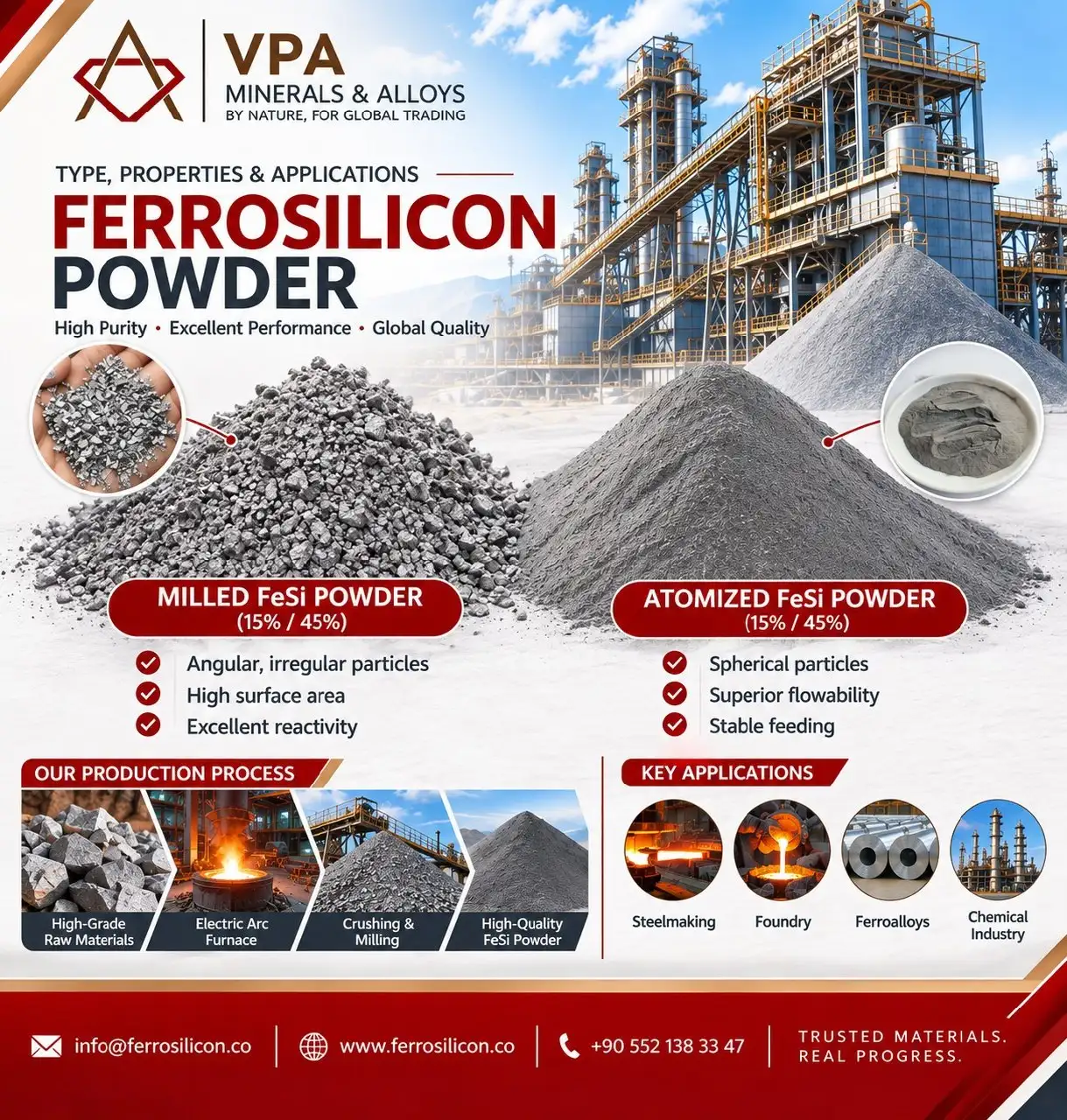
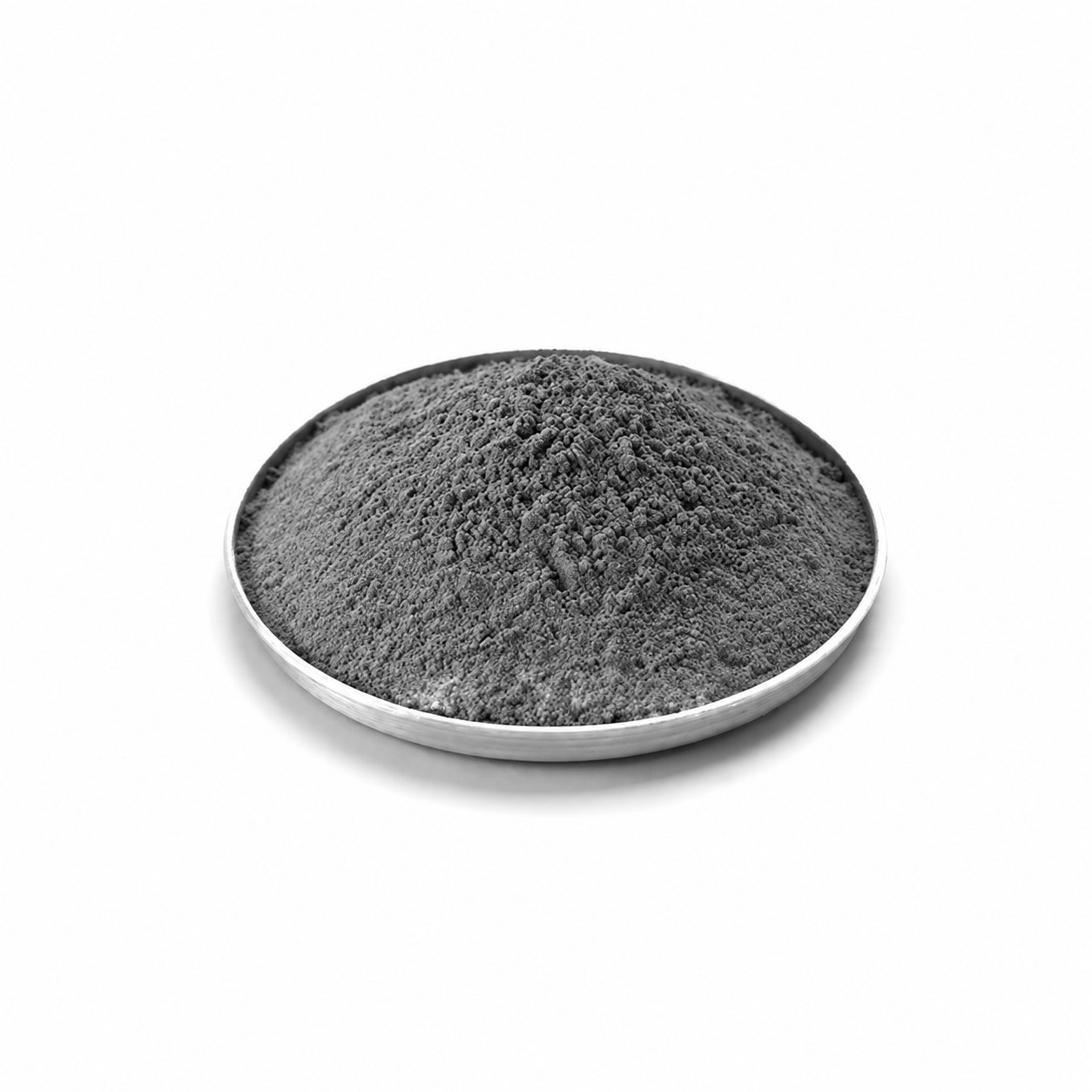
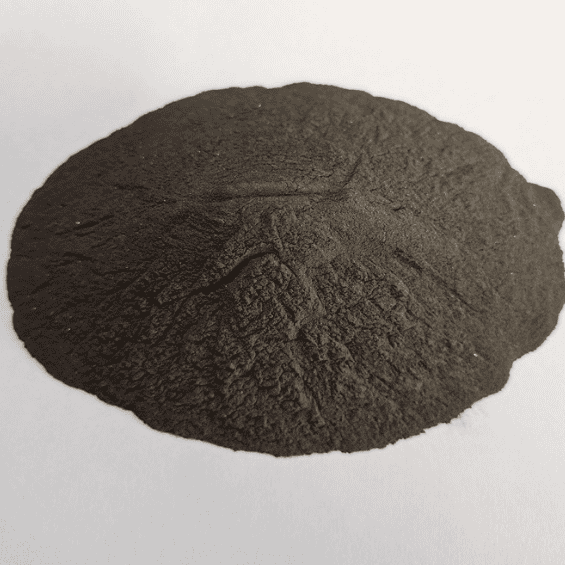
Ferrosilicon powder, also called ferro silicon powder or FeSi powder, is an iron–silicon alloy processed into a controlled particle-size range. Depending on its grade and specification, it can be used as a deoxidizer, silicon carrier, or process material in metallurgical applications. Its behaviour is influenced by silicon content, particle size, particle shape, surface condition and feeding method.
Compared with lump alloy, powder offers a larger specific surface area at the same mass. This can change dissolution and reaction behaviour, although actual silicon recovery depends on addition practice, slag conditions, temperature and residence time.
Başlıca metalürjik işlevler
Parçacık özellikleri neden önemlidir?
Fine particles generally expose more surface area per unit mass, while particle shape and the width of the size distribution influence flow, segregation, dust generation and feeding behaviour. These effects should be evaluated together rather than treating mesh size as the only quality indicator.
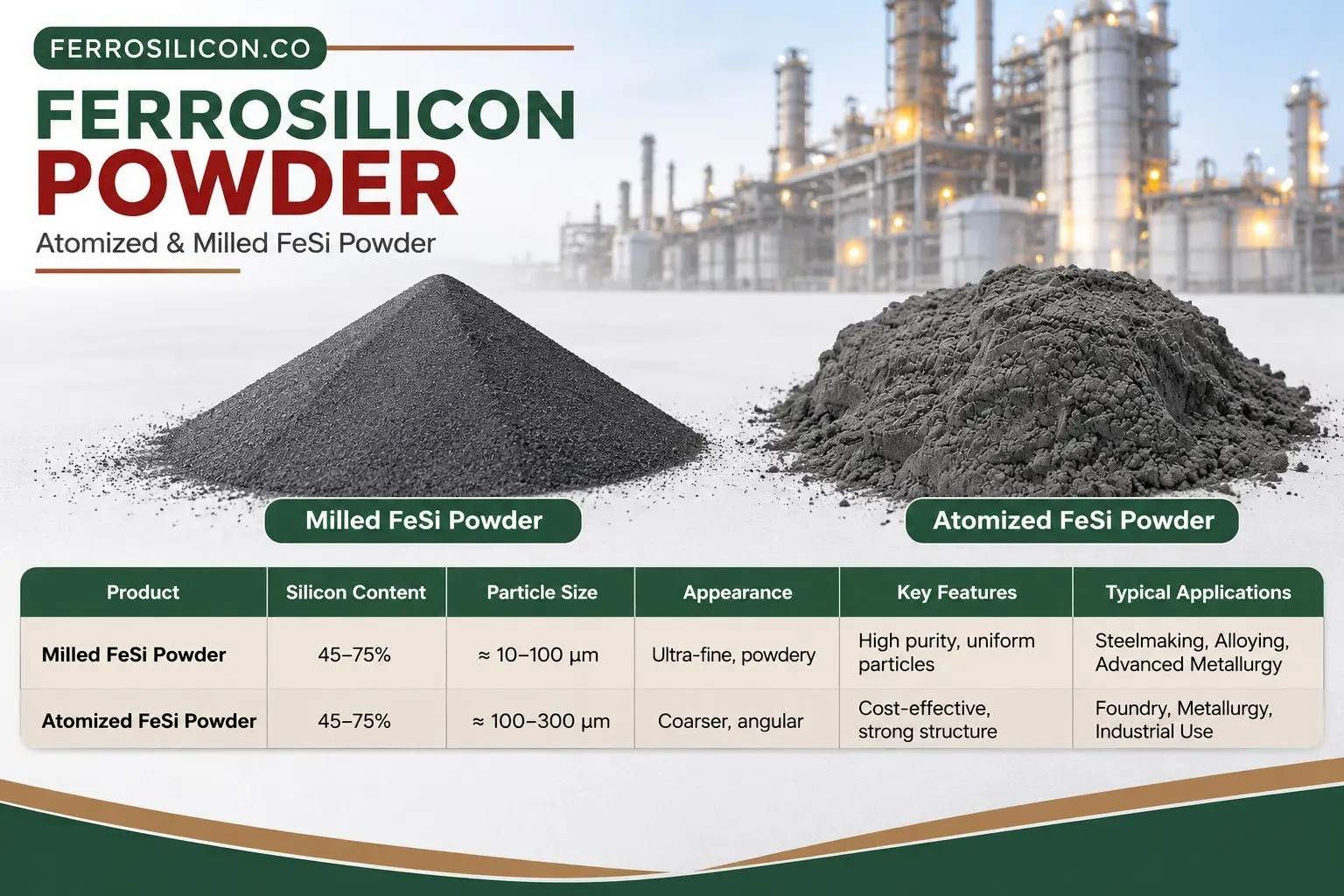
Öğütülmüş ve Atomize Ferrosilisyum Tozu: Teknik Farklılıklar
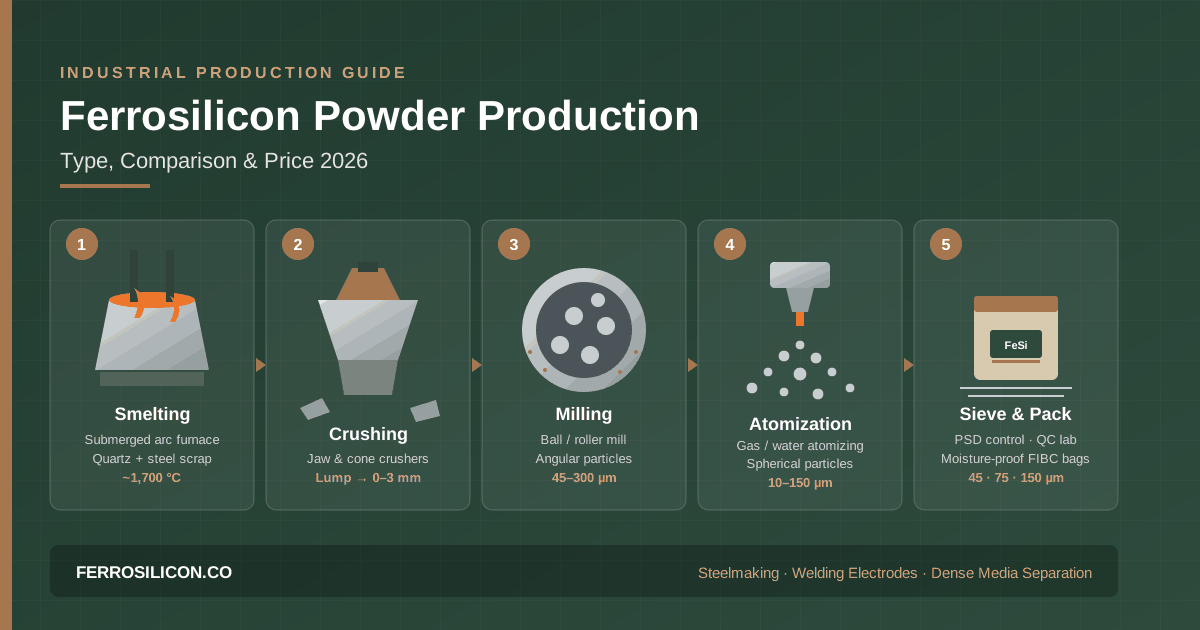
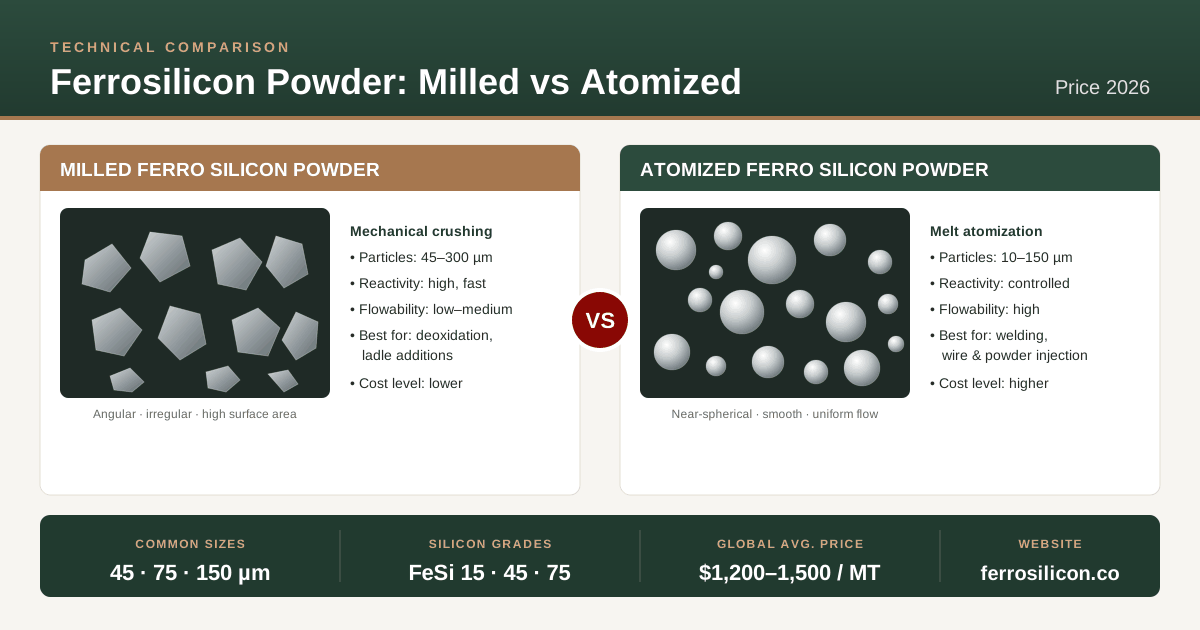
Milled and atomized powders are made through different production routes. Milling breaks solid alloy into smaller particles, usually producing angular and irregular shapes. Atomization disperses molten alloy into droplets that solidify; the resulting particles are generally more rounded, although morphology depends on the atomizing process and operating conditions.
| Özellik | Öğütülmüş toz | Atomize toz |
|---|---|---|
| Üretim yöntemi | Kırma, öğütme ve sınıflandırma | Erimiş alaşımın atomizasyonu |
| Tipik morfoloji | Köşeli / düzensiz | Daha yuvarlak / küresele yakın |
| Akış davranışı | Depends strongly on fines and shape | Can offer improved flow in suitable grades |
| PSD kontrolü | Screening and classification | Atomization conditions and classification |
| Toz oluşumu ve kullanım | Depends on fines, moisture and handling | Depends on fines, surface condition and handling |
| Tipik değerlendirme | Angular morphology and cost-effective size reduction | Flow consistency for specified powder applications |
For product-specific details, review atomised ferrosilicon powder 15-45 and milled ferrosilicon powder 15-45.
Parçacık Boyutu Dağılımı (PSD): D10, D50 ve D90
Particle size distribution describes how particle sizes are distributed through a powder sample. D10, D50 and D90 are cumulative percentiles: D10 is the size below which 10% of the measured sample falls, D50 is the median size, and D90 is the size below which 90% falls. The measurement method and dispersion procedure should be stated in the test report.
Finer particles can increase available surface area, but very fine fractions may also affect dust control, oxidation exposure, handling and process losses. A suitable PSD is therefore application-specific.
PSD Analiz Aracı, Eğri ve Mesh Dönüştürücü
Plot the cumulative curve, calculate span, read the percentage passing any size and compare two samples.
Cumulative curve (% passing vs size, log scale)
Size-fraction distribution (% by weight per band)
Curves are interpolated on a log-size axis between the reported percentiles; values outside the reported range are extrapolated and indicative only. Sieve (mesh) and laser-diffraction (D-values) results are not interchangeable. Final limits and test methods must be agreed with VPA and confirmed by the applicable TDS / batch COA.
Ferrosilisyum Tozunun Endüstriyel Uygulamaları
Ferrosilicon powder is used in several industrial processes. The correct product is determined by the required chemistry, size distribution, feeding equipment and process objective.
Çelik üretimi ve ikincil metalürji
Used as a silicon-bearing alloy addition and deoxidizer where powder form is compatible with the addition practice.
Alloy addition · DeoksidasyonAğır Ortamla Ayırma
Low-silicon ferrosilicon grades are used to prepare dense suspensions for mineral separation. Density, magnetic recovery and PSD are key selection criteria.
Mineral processing · DMSKaynak sarf malzemeleri
Selected ferrosilicon powders can be used in electrode and flux formulations where chemistry, particle size and manufacturing consistency meet the formulation requirements.
Electrodes · Flux formulationsToz enjeksiyonu
Specified powders may be used in metered or pneumatic systems designed for the material's flow and particle characteristics.
Metered feeding · InjectionDense Media Density & Consumption Calculator
Convert a target medium density into solids loading, initial FeSi charge and expected consumption.
Medium density vs solids loading (your operating point and viscosity guide limit)
Physical calculation only: Cv = (ρmedium − ρliquid) / (ρsolid − ρliquid). It ignores ore fines, magnetite or clay contamination and temperature, and the viscosity limit is a rough planning guide, not a plant specification. Loss rate and operating hours must come from your own plant data. No price or guaranteed consumption is implied.
Typical Specifications of Commercial Ferrosilicon Powder
The table below gives broad commercial reference ranges, not a universal specification. Values vary by grade and producer. Buyers should define the chemistry and PSD limits in the purchase specification and verify them against the batch COA.
| Parameter | Typical reference | Specification note |
|---|---|---|
| Silicon (Si) | Grade dependent | Common grades include FeSi 15, 45, 65, 70 and 75 |
| Iron (Fe) | Balance | Subject to other alloying elements |
| Aluminium (Al) | By grade / order | Set a maximum in the purchase specification |
| Carbon (C) | By grade / order | Important for low-carbon applications |
| Phosphorus (P) | By grade / order | Control according to steel or process requirements |
| Sulfur (S) | By grade / order | Control according to end-use requirements |
| Particle size | Uygulama-specific | Define sieve cuts or D-values and test method |
| Bulk density | Test required | Do not confuse bulk density with true alloy density |
| Documentation | COA / TDS / PSD | Batch-specific certificate and agreed test methods |
VPA Chemical Composition and Particle-Size Analysis
The following values are the laboratory figures supplied for this technical page. They should be treated as product-reference data; each shipment should be assessed using its own batch COA and the agreed sampling and test method.
FeSi 45% powder — chemical analysis
| Element | Reported value |
|---|---|
| Si | 43–47% |
| Fe | Balance |
| C | 0.10% max |
| Al | 1.50% max |
| P | 0.01% max |
| S | 0.01% max |
FeSi 45% powder — screen analysis
| Size fraction (μm) | Distribution (%) |
|---|---|
| 300–180 | 10–35 |
| 180–90 | 35–60 |
| 90–45 | 25–45 |
| 45–63 | 14 |
| Below 45 | 20 max |
Data clarification: the supplied 45–63 μm fraction overlaps the stated 90–45 μm band, and the listed ranges are not a closed mass balance. Confirm the original sieve report and correct fraction labels before using this table as a contractual specification.
FeSi 45% — particle-size percentiles (μm)
| D3 | D6 | D10 | D16 | D25 | D50 | D75 | D84 | D90 | D97 | D98 |
|---|---|---|---|---|---|---|---|---|---|---|
| 32.4 | 43.2 | 53.6 | 66.2 | 82.3 | 125.7 | 185.3 | 219.6 | 254.2 | 331.2 | 355.2 |
Ferrosilicon grades for Ağır Ortamla Ayırma (DMS)
VPA's DMS product references include FeSi 15 for manganese DMS, ferrosilicon for lead-zinc DMS, ferrosilicon for diamond DMS, 270D-equivalent DMS ferrosilicon and milled FeSi 15 DMS.
| Type | Fe | Si (%) | Ti (%) | Al (%) | Yoğunluk (g/cm³) |
|---|---|---|---|---|---|
| Fe-Si 15 | Balance | 14–16 | — | ≤1 | 6.5–7.1 |
| Fe-Si 53 | Balance | 14–16 | 3–5 | 2–5 | 6.5–7.1 |
| Fe-Si 103 | Balance | 12–15 | 3–8 (reported as TiO₂) | 2–5 | 6.5–7.1 |
DMS grades — screen and particle-size analysis
| Type | Below 45 μm (%) | 45–75 μm (%) |
|---|---|---|
| Fe-Si 90%-45 | 90 ± 5 | 10 ± 5 |
| Fe-Si 70%-45 | 70 ± 5 | 30 ± 5 |
| Type | D3 | D6 | D10 | D16 | D25 | D50 | D75 | D84 | D90 | D97 |
|---|---|---|---|---|---|---|---|---|---|---|
| Fe-Si 90%-45 | 6.12 | 8.46 | 10.51 | 12.95 | 16.01 | 23.76 | 33.64 | 39.03 | 44.16 | 55.96 |
| Fe-Si 70%-45 | 3.00 | 6.74 | 9.75 | 13.11 | 17.46 | 42.16 | 49.18 | 56.06 | 72.11 | 76.52 |
Alıcıların Değerlendirmesi Gereken Temel Kalite Parametreleri
- Kimyasal bileşimConfirm Si and impurity limits against the intended process and purchase specification.
- Parçacık boyutu dağılımıSpecify sieve fractions or D-values, the measurement method and acceptable tolerance.
- Parçacık morfolojisiAssess whether angular or rounded particles are appropriate for the feeding and process requirements.
- Yığın yoğunluğu ve akışRequest measured values using a stated method; bulk density is not the same as true material density.
- Parti tutarlılığıCompare COAs across lots and check that sampling and testing procedures remain consistent.
- Ambalaj ve elleçlemeReview moisture protection, bag construction, dust controls and safe handling instructions.
Küresel Pazarda Ferrosilisyum Tozu Fiyatı
Ferrosilicon powder pricing is not determined by silicon percentage alone. The alloy grade, production route, particle-size specification, packaging, order quantity, origin, freight and delivery terms all influence the final offer.
For a meaningful comparison, request a current quotation based on the same chemistry, PSD, packaging, quantity and Incoterm. Historical or indicative regional price ranges should not be treated as live market offers.
İhracat Bölgeleri, Ambalaj ve Elleçleme
VPA supplies ferroalloy products to buyers across the Middle East, CIS and Caucasus, Europe, South and East Asia, Southeast Asia and North Africa. Shipment planning depends on destination, cargo volume, packaging and agreed delivery terms.
Ambalajlama ve depolama koşulları
Ferrosilicon powder is commonly packed in lined bags or suitable FIBC packaging selected for the particle size and transport conditions. Keep packages closed and dry, protect them from contamination, and follow the supplier's safety data sheet. Fine metallic alloy powders require appropriate dust control, housekeeping, grounding and equipment selection based on the site's risk assessment.
Ferrosilisyum Tozu Hakkında Yaygın Teknik Yanlış Anlamalar
- A higher silicon percentage is not always the right choice. The grade must match the process objective and material balance.
- Mesh size and D-values are not interchangeable. Sieve analysis and laser-diffraction percentiles describe particle size in different ways.
- Powder shape affects handling. Morphology can influence flow and feeding, but actual performance should be tested in the intended system.
- Bulk density is not true density. It includes the void spaces between particles and depends on the measurement procedure.
- One COA does not establish long-term consistency. Review multiple production lots and agreed quality tolerances.
- Packaging and safe handling matter. Moisture, contamination and uncontrolled dust can create quality and operational problems.
Doğru Ferrosilisyum Tozunu Seçmek
A reliable ferrosilicon powder specification brings chemistry, particle-size distribution, morphology, testing method and packaging together. Buyers should define the process requirement first, then compare suppliers using equivalent technical data rather than relying on a single headline value such as silicon content or mesh size.
For procurement, the most useful starting documents are a current TDS, a batch-specific COA, PSD results with the test method stated, and a clear packing and delivery specification. For additional product information, see the ferrosilicon powder page on Viraphe.
Last reviewed: November 2026 · Technical content by Vira Pars Alloy.
Sıkça Sorulan Sorular
What is ferrosilicon powder (ferro silicon powder)?
Ferrosilicon powder, also written ferro silicon powder or FeSi powder, is an iron–silicon alloy ground or atomized into a controlled particle-size range. It is used as a deoxidizer and silicon source in steelmaking, as a dense medium in mineral separation (DMS), and in welding consumables and powder-injection systems.
What is the difference between milled and atomized ferrosilicon powder?
Öğütülmüş toz is produced by mechanically reducing solid alloy and is generally angular. Atomize toz is formed from droplets of molten alloy and is generally more rounded. Their suitability depends on PSD, flow requirements and the process.
What do D10, D50 and D90 mean in a ferrosilicon PSD report?
They are cumulative particle-size percentiles. D10 is the size below which 10% of the measured sample falls; D50 is the median; D90 is the size below which 90% falls. Always check the measurement method.
Why is low-silicon ferrosilicon used in DMS?
DMS plants use specified low-silicon ferrosilicon (such as FeSi 15, with a particle density of about 6.5–7.1 g/cm³) to reach the required suspension density with good magnetic recovery. Standard high-silicon grades such as FeSi 75 are much lighter and are not a substitute without technical approval. Grade selection should consider the plant's medium-density range, viscosity, recovery circuit and PSD.
Can FeSi 45 powder be used in welding electrodes?
It may be used in electrode formulations when the chemistry, particle-size distribution, moisture condition and formulation requirements are suitable. Confirm the electrode manufacturer's approved specification rather than choosing solely by price or production route.
What documents should I request before buying?
Request a current TDS, batch-specific COA, PSD report with test method, SDS, packaging details and a quotation stating quantity, destination and Incoterm.
How is ferrosilicon powder shipped internationally?
Shipment options depend on destination, volume, packaging and agreed Incoterm. The supplier should confirm routing, transit estimate, export documents and cargo packaging for the specific order.