09121684359 info@ferrosilicon.co

Ferrosilicon Industry Reference value is not determined solely by silicon percentage.

What truly impacts production cost and process efficiency is effective silicon recovery-the portion of silicon that actually dissolves and functions in the melt.

Fines, oxidation losses, improper sizing, and interaction with elements like aluminum can reduce real recovery significantly, even in high‑%Si material. Buyers who focus only on chemical analysis often pay more in practice.

Understanding recovery behavior leads to better material selection, lower losses, and more stable metallurgical performance.

Why %Si Alone Misleads Buyers:

Buyers often assume that higher silicon content guarantees better performance and lower cost per unit of silicon.

In practice, this assumption ignores how ferrosilicon behaves in real melting conditions.

Silicon losses occur through fines, oxidation during charging, incomplete dissolution, and interactions with other elements in the alloy.

As a result, two ferrosilicon grades with the same %Si can deliver very different effective recovery rates.

Pricing based only on chemical analysis shifts attention away from operational efficiency and leads to misleading cost comparisons.

What Effective Ferrosilicon Recovery Means:

Effective ferrosilicon recovery refers to the percentage of silicon that actually dissolves into the melt and contributes to the metallurgical reaction, rather than the silicon listed in the chemical analysis.

It reflects real performance inside the furnace or ladle, after losses from fines, oxidation, delayed dissolution, and process handling are accounted for.

Recovery is therefore a functional parameter, shaped by particle size distribution, cleanliness, addition practice, and melt conditions.

Two materials with identical %Si can differ significantly in recovery, leading to different real costs per ton of usable silicon.

Where Silicon Losses Actually Occur:

Silicon losses in ferrosilicon occur at multiple stages between charging and final dissolution in the melt.

The most common source is fines, which oxidize rapidly or are carried away with slag and dust before contributing any silicon.

Additional losses happen during charging, where exposure to air and high temperatures accelerates oxidation, especially for small particle sizes.

Incomplete or delayed dissolution can further reduce recovery when ferrosilicon is added at suboptimal times or locations in the process.

These losses are rarely reflected in chemical analysis but have a direct impact on effective recovery and overall cost.

How Sizing and Fines Impact Recovery:

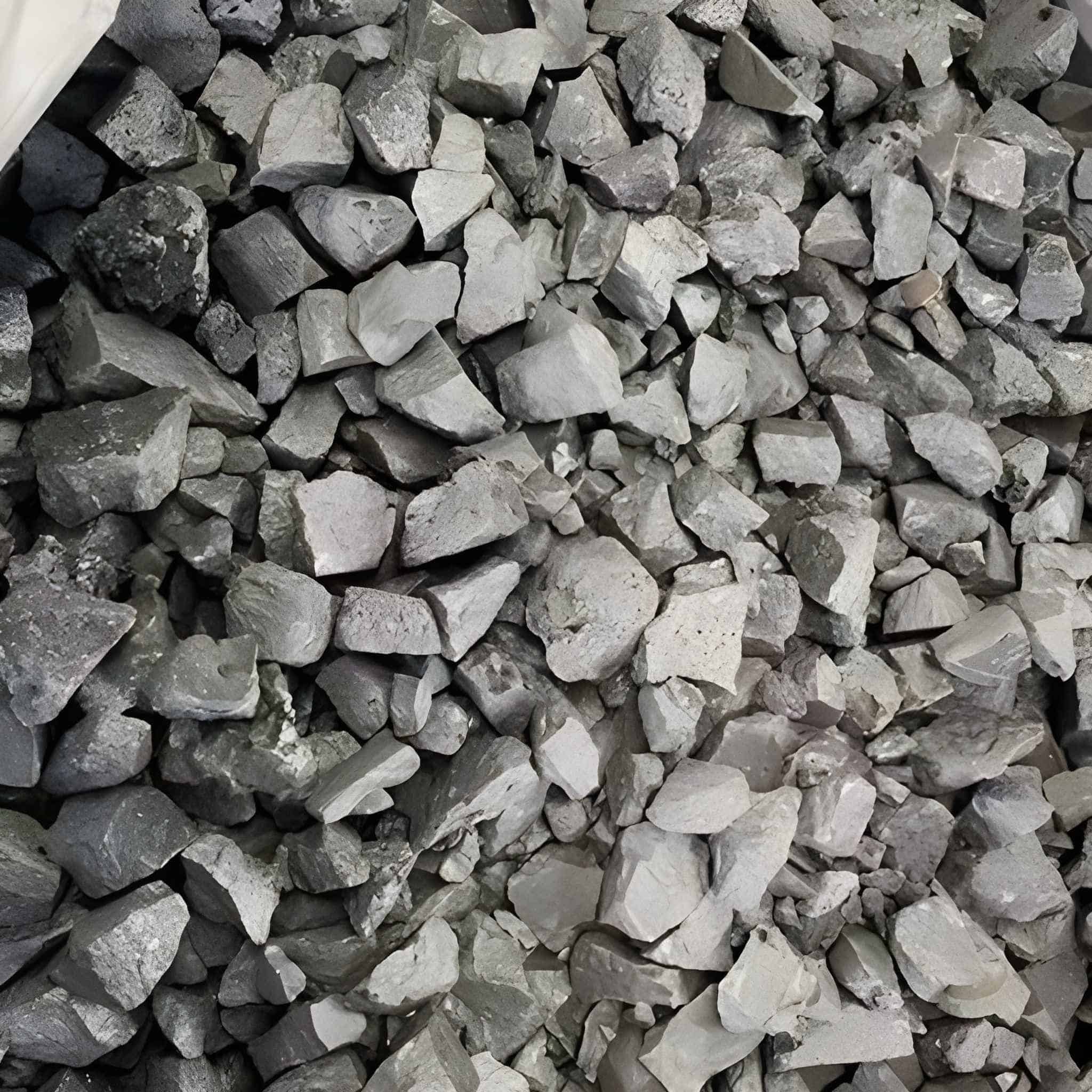
Particle size distribution is one of the strongest yet most underestimated drivers of ferrosilicon recovery.

Oversized lumps dissolve slowly and may not fully react within the available process time, while excessive fines oxidize almost immediately upon charging.

High fine content increases silicon losses through dusting and slag absorption, reducing the amount of silicon that actually enters the melt.

Consistent, controlled sizing matched to furnace type and addition practice—typically delivers higher and more stable recovery than higher nominal %Si with poor size control.

Aluminum’s Hidden Role in Ferro silicon Performance:

Aluminum content in ferro silicon is often treated as a secondary specification, yet it has a measurable impact on recovery, slag behavior, and inclusion formation.

While higher aluminum can improve deoxidation efficiency in some steelmaking applications, it also increases slag volume and can reduce usable silicon recovery when not controlled.

The true cost of aluminum is rarely visible in price per ton but appears in yield loss, slag handling, and downstream quality issues.

When Higher %Si Becomes More Expensive:

A higher nominal silicon percentage does not automatically translate into lower cost per unit of recovered silicon.

Beyond a certain point, gains from higher %Si are offset or even reversed by losses related to fines, slower dissolution, higher aluminum content, and process incompatibility.

In practice, many operations pay more for silicon that never enters the melt.

Scenario
Nominal %Si
Key Hidden Factor
Effective Recovery
Net Cost Outcome
Standard-grade FeSi
72%
Balanced sizing, low Al
High (stable)
Baseline
High-%Si upgrade
75%
Higher fines ratio
Medium
Higher cost
High-%Si, high Al
75–78%
Slag volume increase
Low
Much higher cost
Process-optimized FeSi
70–72%
Controlled size + low Al
Very high
Lowest real cost

Decision insight: ferro silicon market evaluation

Once recovery drops by more than 3–4%, the price premium of higher %Si is rarely justified, even if the chemistry appears superior on paper.

Questions Buyers Should Ask Before Quoting:

1. What is the guaranteed size distribution, including fines?

Answer:

The material is supplied with a controlled size range suitable for standard steelmaking practice, with fines kept to a minimum to reduce oxidation and dust losses. Typical fines (<3 mm) remain within an industrially acceptable range.


2. What is the maximum aluminum content, and how is it controlled?

Answer:

Aluminum is controlled as a functional parameter, not just reported. The maximum Al level is kept within limits that avoid excessive slag formation and recovery loss, subject to application requirements.


3. Is the ferrosilicon from a single production line or blended?

Answer:

The ferrosilicon is sourced consistently from defined production lines. If blending is applied, it is controlled and documented to ensure stable recovery performance.


4. Can you recommend the optimal addition practice for our furnace type?

Answer:

Yes. Based on furnace type and tapping practice, we can recommend the most effective addition timing and particle size to maximize silicon recovery.


5. Do you provide batch-to-batch consistency data, not only CoA?

Answer:

Yes. Historical production data and consistency ranges can be shared upon request to demonstrate stability beyond single-batch analysis.


6. Are you willing to discuss recovery-based performance, not only %Si?

Answer:

Yes. We benchmark ferrosilicon based on recoverable silicon and operational performance, not solely on nominal chemical composition.

Conclusion: Why Recovery Defines Real Ferrosilicon Value

Ferrosilicon performance cannot be evaluated by %Si alone.Real value is created or destroyed at the point of recovery.

Factors such as sizing consistency, fines ratio, aluminum content, and addition practice directly determine how much silicon actually enters the melt.

When these variables are ignored, higher nominal grades frequently result in higher total cost and lower process stability.

Buyers who shift from specification-based purchasing to recovery-based decision-making consistently achieve more predictable metallurgy and better cost control. In today’s market, the most competitive ferrosilicon is not the one with the highest silicon percentage, but the one with the highest effective recovery per dollar spent.

👉 For a consolidated view of ferrosilicon grades, specifications, and market dynamics, see our Ferro silicon Industry Reference on the homepage.

Contact Direct:

info@ferrosilicon.co | +989121684359 | WhatsApp RFQ