
Ferrosilicon Magnesium (FeSiMg)
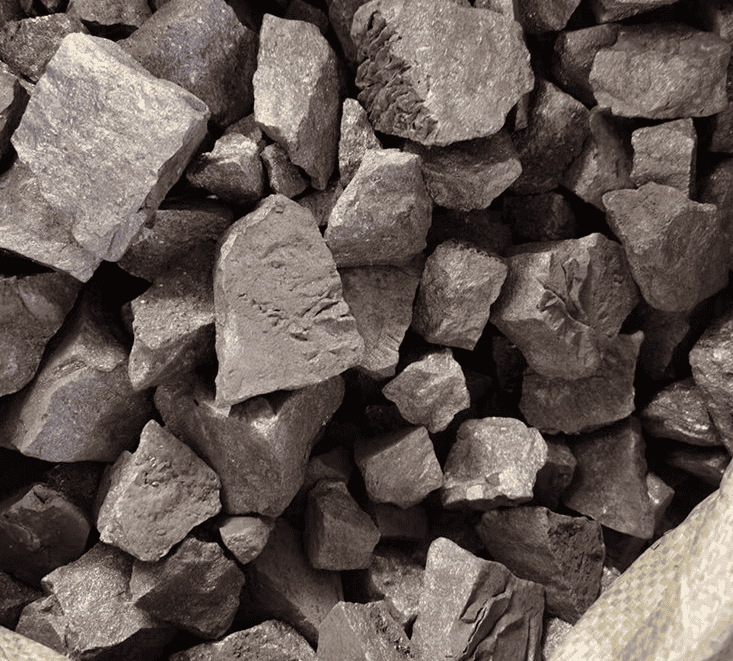
Ferrosilicon Magnesium (FeSiMg) is a critical nodularizing alloy for ductile iron production, ensuring superior graphite spheroidization and enhanced mechanical properties.
Sourced directly from trusted manufacturers in Iran, Armenia, and Turkey with fast delivery to global destinations.
Mg %: 3.0-6.5
Si %: 44-48
Ca %: 1.0-2.0

Product Specification Table:
| Grade | Mg % | Si % | Ca % | Al % | RE % | Ba % | C % | P % | S % |
| FeSiMg 3 | 2.5-3.5 | 44-48 | 1.0-2.0 | ≤1.0 | — | — | ≤0.5 | ≤0.04 | ≤0.02 |
| FeSiMg 4 | 3.5-4.5 | 44-48 | 1.0-2.0 | ≤1.0 | — | — | ≤0.5 | ≤0.04 | ≤0.02 |
| FeSiMg 5 | 4.5-5.5 | 44-48 | 1.0-2.0 | ≤1.0 | — | — | ≤0.5 | ≤0.04 | ≤0.02 |
| FeSiMg 6 | 5.5-6.5 | 44-48 | 1.0-2.5 | ≤1.0 | — | — | ≤0.5 | ≤0.04 | ≤0.02 |
| FeSiMg 6 | 5.5-6.5 | 44-48 | 1.0-2.5 | ≤1.0 | — | — | ≤0.5 | ≤0.04 | ≤0.02 |
| FeSiMg 7 | 6.5-7.5 | 42-46 | 1.0-2.5 | ≤1.2 | — | — | ≤0.5 | ≤0.04 | ≤0.02 |
| FeSiMg 8 | 7.5-8.5 | 42-46 | 1.5-3.0 | ≤1.2 | — | — | ≤0.5 | ≤0.04 | ≤0.02 |
| FeSiMg 5 RE | 4.5-5.5 | 44-48 | 1.0-2.0 | ≤1.0 | 1.0-2.0 | — | ≤0.5 | ≤0.04 | ≤0.02 |
| FeSiMg 6 RE | 5.5-6.5 | 44-48 | 1.0-2.0 | ≤1.0 | 1.5-2.5 | — | ≤0.5 | ≤0.04 | ≤0.02 |
| FeSiMg Ba | 5.0-6.0 | 44-48 | 1.0-2.0 | ≤1.0 | — | 2.0-4.0 | ≤0.5 | ≤0.04 | ≤0.02 |
Product Overview:

FeSiMg 5-8% Magnesium
FeSiMg 5-8% delivers maximum magnesium content for heavy-section ductile iron castings where prolonged treatment time and superior spheroidization are critical. This grade ensures complete graphite nodularity even in thick-walled components.

FeSiMg 3-5% Magnesium
FeSiMg 3-5% is the industry workhorse for standard ductile iron production — offering optimal balance between nodularization efficiency, treatment cost, and process control. Perfect for medium-section castings and high-volume foundries.

Premium FeSiMg
Our Premium FeSiMg represents the highest quality tier — engineered for safety-critical automotive parts, pressure-containing components, and applications where trace impurities directly impact fatigue life and mechanical integrity.
How It Works:
During ladle treatment, FeSiMg is added to molten iron typically using the sandwich method, tundish cover method, or cored wire injection.
The magnesium vaporizes and disperses through the melt, reacting with dissolved sulfur (forming MgS) and oxygen (forming MgO). The remaining magnesium promotes spheroidal graphite formation during solidification.
Calcium and rare earth elements, when present, enhance magnesium recovery and provide additional desulfurization.
Global Price & Market Overview (2025):
| Grade | Mg % | Price Range (USD/MT) | Market Trend |
| FeSiMg 3 | 2.5-3.5 | 1,150−1,300 | Stable |
| FeSiMg 4 | 3.5-4.5 | 1,250−1,400 | Stable |
| FeSiMg 5 | 4.5-5.5 | 1,3501,500 | ↗ Slight increase |
| FeSiMg 6 | 5.5-6.5 | 1,450−1,650 | ↗ Slight increase |
| FeSiMg 7 | 6.5-7.5 | 1,550−1,750 | Stable |
| FeSiMg 8 | 7.5-8.5 | 1,650−1,850 | Stable |
| FeSiMg 5 RE | 4.5-5.5 + RE | 1,550−1,750 | ↗ Increasing |
| FeSiMg 6 RE | 5.5-6.5 + RE | 1,650−1,900 | ↗ Increasing |
| FeSiMg Ba | 5.0-6.0 + Ba | 1,500−1,700 | Stable |
Composition Logic:
The alloy is based on a ferrosilicon matrix (typically 44-48% Si) which acts as a carrier for magnesium.
Pure magnesium cannot be added directly to molten iron due to its violent reaction at steelmaking temperatures.
By alloying magnesium with ferrosilicon, the reaction becomes controllable and the magnesium recovery rate improves substantially.
Different grades offer varying magnesium content (3% to 8%) to match specific foundry requirements.
Lower Mg grades suit thin-wall castings where excessive nodularization can cause carbide formation.
Higher Mg grades are preferred for heavy-section castings requiring deep and consistent nodularization throughout the part.
Origin & Supply Chain:
FeSiMg production requires high-purity raw materials and precise furnace control. Major manufacturing hubs include:
- Iran — Competitive pricing with growing export capacity through Bandar Abbas and overland via Turkey
- Armenia — Consistent quality with direct land access to Iran and Georgia’s Black Sea ports
- Turkey — Strategic location bridging Europe and Middle East with established logistics infrastructure
Our multi-origin sourcing model ensures uninterrupted supply regardless of seasonal production variations or regional disruptions.
End Applications:
Ductile iron produced with FeSiMg treatment finds application across demanding industries:
Automotive sector relies on ductile iron for crankshafts, camshafts, steering knuckles, and brake components where strength-to-weight ratio matters.
Infrastructure projects use ductile iron pipes and fittings for water transmission, sewage systems, and gas distribution due to their pressure resistance and longevity.
Heavy machinery benefits from ductile iron in hydraulic cylinders, gear housings, and pump bodies where wear resistance is critical.
Renewable energy sector employs ductile iron in wind turbine hubs and frames where fatigue strength under cyclic loading is essential.
Quality Assurance:
Each shipment undergoes rigorous testing for chemical composition, size distribution, and moisture content.
We provide complete documentation including Certificate of Analysis from accredited laboratories, third-party inspection reports (SGS, Intertek, or Bureau Veritas upon request), and all necessary customs paperwork for smooth import clearance.

Ordering Flexibility:
Whether you operate a small jobbing foundry or a large-scale automotive casting facility, we offer flexible order quantities starting from one 20-foot container (approximately 20 MT).
Packaging options range from 1-ton bulk bags to 25 kg bags on pallets based on your handling equipment and storage preferences.
Frequently Asked Questions:
❓ General Questions
1. What is Ferrosilicon Magnesium used for?
FeSiMg is primarily used as a nodularizing agent in ductile iron production. It converts flake graphite into spheroidal graphite, dramatically improving the mechanical properties of cast iron including tensile strength, ductility, and impact resistance.
2. What is the difference between FeSiMg and pure Magnesium?
Pure magnesium reacts explosively when added to molten iron at temperatures above 1400°C.
Ferrosilicon acts as a carrier matrix that moderates this reaction, allowing controlled magnesium release and higher recovery rates.
This makes FeSiMg safer and more economical for foundry operations.
3. Which FeSiMg grade should I choose?
Grade selection depends on your casting requirements:
- FeSiMg 3-4: Thin-wall castings, lower treatment temperatures
- FeSiMg 5-6: Standard foundry applications, most common choice
- FeSiMg 7-8: Heavy-section castings, higher sulfur base iron
- FeSiMg RE: High-purity ductile iron, automotive-grade castings requiring consistent nodule count
🔬 Technical Questions
1. What is the typical addition rate for FeSiMg?
Addition rates typically range from 1.0% to 1.8% of the molten metal weight, depending on base sulfur content, desired residual magnesium, and treatment method. Higher sulfur levels require higher addition rates.
2. What residual magnesium level should I target?
For most ductile iron applications, target residual Mg between 0.035% and 0.055%. Thin-wall castings may require the lower end (0.030-0.040%) to avoid carbide formation, while heavy sections benefit from the higher end (0.045-0.060%).
3. How does calcium content affect performance?
Calcium enhances magnesium recovery by pre-reacting with oxygen and sulfur in the melt. It also improves slag fluidity and reduces violent reactions. Standard Ca content ranges from 1.0% to 2.5%.
📦 Ordering & Logistics Questions
1. What is the minimum order quantity?
Our standard MOQ is 20 metric tons (one 20-foot container). For trial orders or smaller foundries, we can arrange consolidated shipments starting from 5 MT subject to availability.
2. How is FeSiMg packaged?
Standard packaging includes:
- 1000 kg bulk bags (most common for industrial use)
- 25 kg bags on pallets (easier handling for smaller operations)
- Steel drums for moisture-sensitive environments
All packaging is moisture-resistant with proper labeling for safe handling.
3. What is the typical delivery time?
Delivery timelines depend on origin and destination:
- Ex-works / FOB: 3-5 days after payment confirmation
- CIF Middle East ports: 10-14 days
- CIF Southeast Asia: 18-25 days
- Overland to neighboring countries: 7-12 days
💰 Pricing Questions
1. How is FeSiMg priced?
Pricing depends on magnesium content (higher Mg grades cost more), rare earth content if applicable, order quantity, origin country, and delivery terms (FOB, CIF, DAP). Contact us with your specifications for a competitive quotation.
2. What payment terms do you accept?
We offer flexible payment options:
- T/T (Telegraphic Transfer): 30% advance, 70% against BL copy
- Letter of Credit (L/C) at sight
- CAD (Cash Against Documents) for established customers
🔒 Storage & Handling Questions
1. How should FeSiMg be stored?
Store in a dry, covered warehouse with relative humidity below 70%. Keep bags sealed until use. Avoid direct ground contact by using pallets. Properly stored material maintains quality for 12 months.
2. What happens if FeSiMg gets wet?
Moisture contamination is critical to avoid. Wet FeSiMg can cause violent reactions when added to molten iron due to rapid steam generation.
If material is exposed to moisture, it should be dried thoroughly or discarded. Always inspect packaging integrity before use.
3. Is FeSiMg hazardous?
FeSiMg is classified as a flammable solid (UN 1436 for higher Mg grades). It requires proper labeling, ventilated storage away from water sources, and handling with appropriate PPE.
Detailed safety information is provided in the MSDS accompanying each shipment.
Call to Action & Conclusion:
Ferrosilicon Magnesium stands as an indispensable alloy in modern foundry practice.
Its ability to transform ordinary cast iron into high-performance ductile iron has revolutionized industries from automotive manufacturing to infrastructure development.
Choosing the right FeSiMg supplier means more than comparing prices.
It requires a partner who understands metallurgical requirements, maintains consistent quality across shipments, and delivers reliably regardless of market fluctuations.
At ferrosilicon.co, we combine direct access to multiple production sources across Iran, Armenia, and Turkey with deep technical knowledge of foundry applications.
This multi-origin approach protects your supply chain from regional disruptions while ensuring competitive pricing through direct manufacturer relationships.
Whether you operate a small jobbing foundry requiring occasional shipments or a large-scale production facility with continuous demand, our flexible ordering options and responsive logistics network are designed to meet your operational rhythm.
Quality is non-negotiable. Every ton we ship comes with complete traceability, certified analysis, and the assurance that your ductile iron production will perform as expected consistently, batch after batch.
📩 Ready to secure your FeSiMg supply?
Contact our team today for a customized quotation based on your grade requirements, volume needs, and preferred delivery terms. Let us become your trusted ferroalloy partner.
📞 Contact Direct
info@ferrosilicon.co | +989121684359 | WhatsApp RFQ
ferrosilicon.co – Premium FeSiMn, Unbeatable Value 💎